

Your potential clients are not just using traditional Google searches to find a business anymore. Even with a Google search, Gemini usually puts its two cents in before they ever get to the search results.
They might ask AI:
- Who provides WordPress support for small businesses in Christchurch?
- Which local web designer understands CRM integration?
- Where can I find an accessible café near me?
- Does this company work with Australian clients?
- Is this business still operating?
AI-powered search tools are becoming another way for potential customers to research businesses, compare providers and decide whom to trust.
But before an AI tool can confidently recommend your business, it needs to understand some fairly basic things. Who are you? What do you do? Where do you operate? And can the information it has found be trusted?
That is where consistency becomes important.
AI does not “know” your business in the way a person does
The phrase “AI verification” can be slightly misleading.

AI tools do not usually conduct a formal background check or issue a verified-business badge. Instead, an AI search tool may retrieve information from websites, business profiles, directories, reviews, social platforms and other accessible sources. It then attempts to identify which information belongs to the same business and which sources are relevant to the question.
ChatGPT search, for example, can search current web content and provide links to the sources used in its answers. Microsoft is also giving website owners visibility into when their content is cited in AI-generated answers through Bing Webmaster Tools.
If the same clear information appears across several credible places, it becomes easier for both search engines and AI systems to understand your business. If those sources contradict one another, confidence becomes harder to establish.
Imagine an AI tool finds:
- one business name on your website and a slightly different name on LinkedIn;
- an old address in an online directory;
- different phone numbers on Facebook and Google;
- a service mentioned in a social profile but not on your website;
- operating hours that vary from one platform to another;
- an About page that does not identify who owns or runs the business.
A potential customer might already find this confusing. A machine trying to connect all these references faces much the same problem.
Your online presence is a collection of evidence
Your website remains your most important source of information because it is the online platform you control. But it rarely stands alone.
Information about your business may also appear on:
- your Google Business Profile;
- LinkedIn;
- Facebook and Instagram;
- industry or professional directories;
- supplier and partner websites;
- local business listings;
- event and conference websites;
- review platforms;
- media articles;
- company registers;
- old websites and abandoned profiles.
Together, these sources create a collection of digital evidence about your business.
Search engines have used this sort of information for years. AI-powered search makes it even more important because the answer presented to a user may be assembled from multiple sources rather than taken from one webpage.
Consistency does not mean copying the same paragraph onto every platform. It means making sure the fundamental facts agree.
Which business details should be consistent?
Start with the information that identifies your business.
Your business name
Decide how your business should be referred to and use that name consistently.
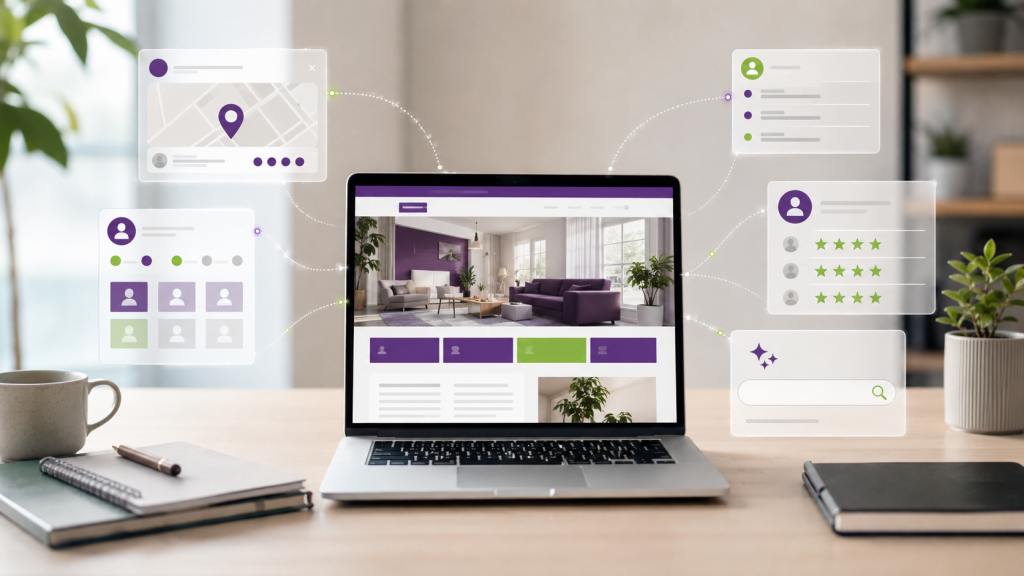
If your registered company name is different from the brand customers know, your website can explain the relationship. For example:
Be Design is the trading name of TMRA Limited.
You do not need to force a legal name into every social media description, but you should avoid leaving systems (and customers) to guess whether two different names represent the same organisation.
Your location and service area
A service-based business may not want to publish a home address, and that is perfectly reasonable. But it should still clearly communicate where it is based and where it works.
For example:
Based in Christchurch and working with clients throughout New Zealand and Australia.
This is much more useful than leaving location information unstated or using vague language such as “working with clients everywhere”.
Your contact information
Check that your preferred phone number, email address and website URL are current wherever your business is listed. Old contact details are more than an AI-search problem. They create an immediate barrier for real customers who are ready to enquire.
Your opening or contact hours
If you publish hours, keep them accurate. This is particularly important for businesses with physical premises, appointments or customer service hours. Temporary closures and holiday hours should also be updated where appropriate.
Your services
Your website, social profiles and directory listings should broadly agree on what your business actually provides.
That does not mean every platform needs a comprehensive service list. However, if your LinkedIn profile says you specialise in business automation while your website only mentions graphic design, it may be difficult to establish automation as one of your genuine areas of expertise.
The people behind the business
A clear About page helps customers understand who they are dealing with. It can also help search systems connect a business with the people who own, manage or represent it.
Include real names, roles, relevant experience and professional credentials where appropriate. Anonymous marketing copy offers fewer trust signals than transparent information about the people responsible for the work.
Your website needs to state the obvious
Many business owners assume that visitors will piece together information from context. They often will not. This is especially true of your non-human site visitors.
A beautiful homepage might communicate the personality of the brand while never plainly saying:
- what the business does;
- who its services are for;
- where it operates;
- who runs it;
- how to make contact;
- what happens after an enquiry.
Clear, specific wording is not unsophisticated. It is helpful. It’s far better to be clear than to be clever.
For example, “Helping you bring your ideas to life” could describe a web designer, architect, business coach, printer or wedding planner. “Strategic WordPress websites for New Zealand small businesses” gives both people and machines something concrete to work with.
Your creative messaging can then add personality and differentiation around that clear foundation.
Structured data can reinforce what the page says
Structured data, often called schema markup, is code that describes the meaning of information on a webpage in a machine-readable format.
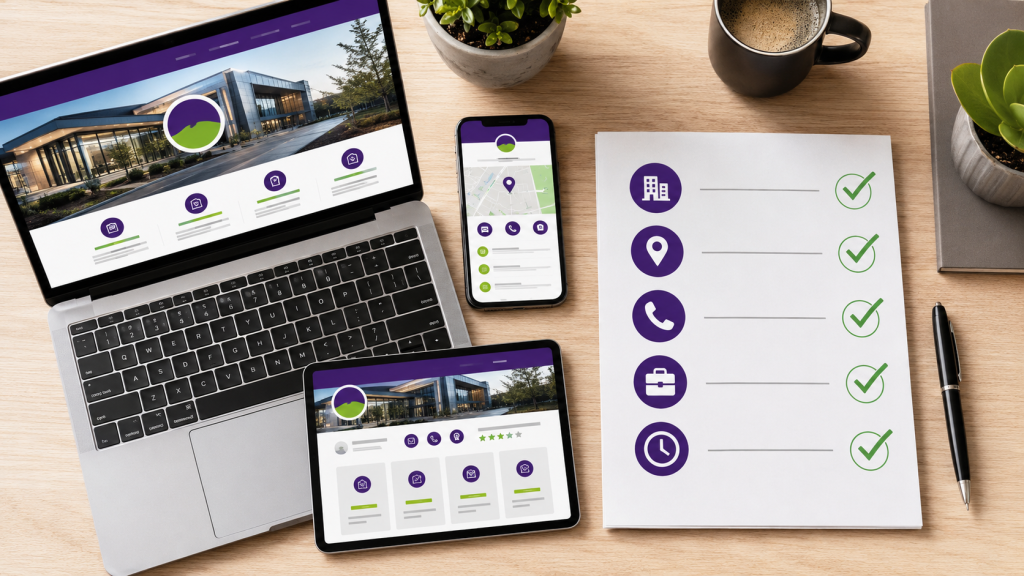
Google explains that Organisation structured data can identify details such as a business’s name, address, contact information, logo, website and related online profiles. LocalBusiness markup can also provide information such as opening hours and business location.
This does not guarantee that your business will appear in an AI-generated answer. Nor does it replace good website content. It simply helps search systems interpret information that should already be visible and accurate on the page.
Useful schema may include:
- Organisation or LocalBusiness details;
- the official business name and website address;
- contact details;
- a logo;
- service areas;
- links to recognised social profiles;
- information about authors and team members;
- services, products, articles and frequently asked questions where appropriate.
The important rule is that the structured information should agree with the content a visitor can see. Google specifically advises against using structured data to provide misleading or invisible information.
Schema should confirm the story your website tells, not create a different one behind the scenes.
Consistency is not the same as credibility
Repeating the same claim across ten profiles does not automatically make it trustworthy.
An AI system may also consider the apparent relevance, independence and authority of a source. A profile created by the business itself is useful, but it is not the same as:
- a genuine customer review;
- membership of a recognised professional organisation;
- a supplier listing you as an authorised partner;
- a reputable organisation crediting your work;
- an independently published article mentioning your expertise;
- a case study supported by a named client.
This is why building online authority involves more than adjusting metadata or adding schema.
Your website should include real evidence such as:
- detailed case studies;
- specific testimonials;
- client names and project examples where permission has been given;
- genuine qualifications and affiliations;
- original articles demonstrating your knowledge;
- clear policies and contact information;
- accurate publication and update dates.
The aim is not to manufacture signals for AI. It is to make genuine business credibility easier to see.
What happens when your information changes?
Business information naturally changes over time. You might move premises, add a service, change your trading name or stop offering something that is no longer profitable.
The mistake is updating one prominent platform and forgetting everywhere else.
When something important changes, review:
- Your website, including the header, footer, Contact page and About page.
- Your Google Business Profile.
- Your main social media profiles.
- Industry and local directories.
- Relevant professional memberships.
- Your email signature and proposal documents.
- Structured data and search engine listings.
- Old landing pages that may still be accessible.
Search engines and AI tools may not discover every update immediately. However, a consistent update across the main sources reduces the chance that obsolete information will continue competing with the new version.
A simple business information audit
You can carry out a basic check by searching for:
- your exact business name;
- your business name with your city;
- your business name with “contact”;
- your phone number;
- your address, if publicly listed;
- your name together with the business name;
- your primary services and location.
Then ask:
- Do the results clearly refer to the same business?
- Are the contact details correct?
- Is it obvious what the business does?
- Are old services or locations still appearing?
- Are there duplicate or abandoned profiles?
- Does the website provide a more complete and authoritative answer than third-party listings?
You can also ask several AI search tools what they can tell you about your business. Treat the result as a useful diagnostic rather than a definitive score. Look at which sources are cited, what information is missing and whether any details are incorrect.
Clear information helps people as well as machines
It would be easy to view online consistency as yet another technical task created by AI. In reality, it is good business communication.
A potential customer wants reassurance that they have found the right business. They want to know that it is genuine, current and suitable for their needs. Conflicting details make the decision harder, regardless of whether those details are being interpreted by a human or an algorithm.
AI search has simply made the quality of your online information more visible. Your website needs to look professional, but it also needs the “brains” to communicate clearly, connect related information and provide credible evidence about the business behind it.
Because before AI can recommend your business, it first needs to work out who you are.
Can search engines and AI tools make sense of your business?
Be Design can review your website’s content, structure, schema and wider online presence to identify conflicting information, missing trust signals and opportunities to strengthen your visibility. Get in touch for an independent website and online authority review.
