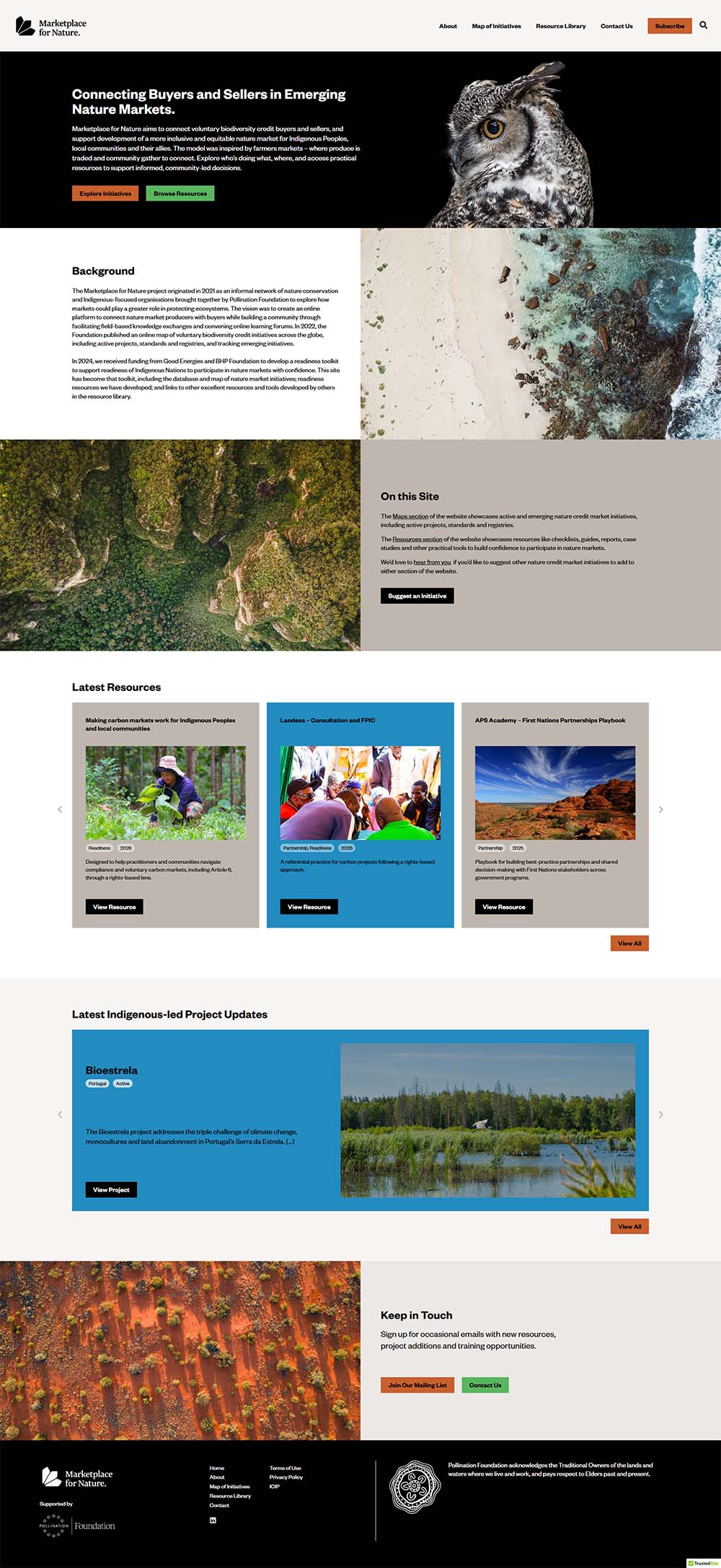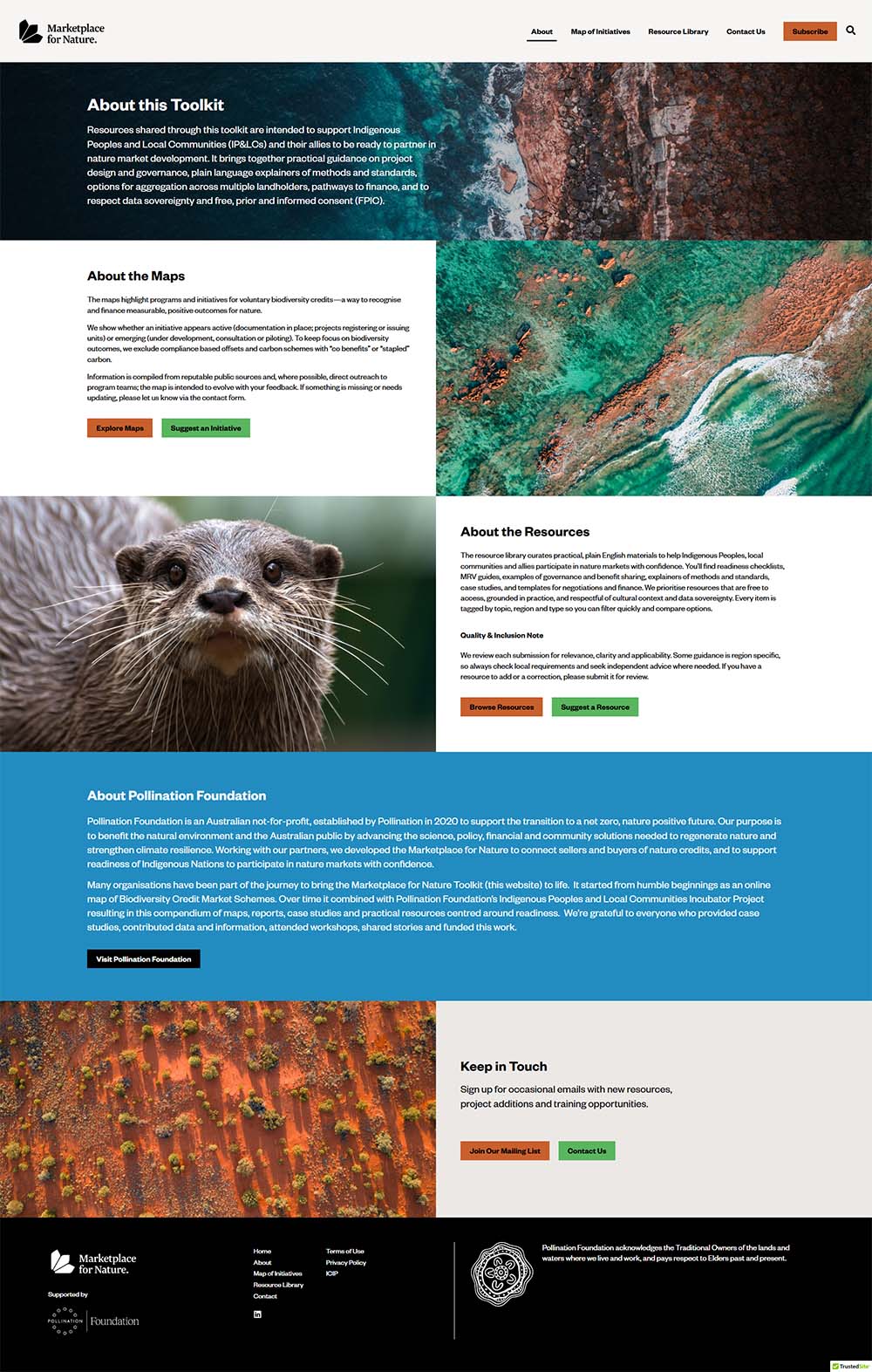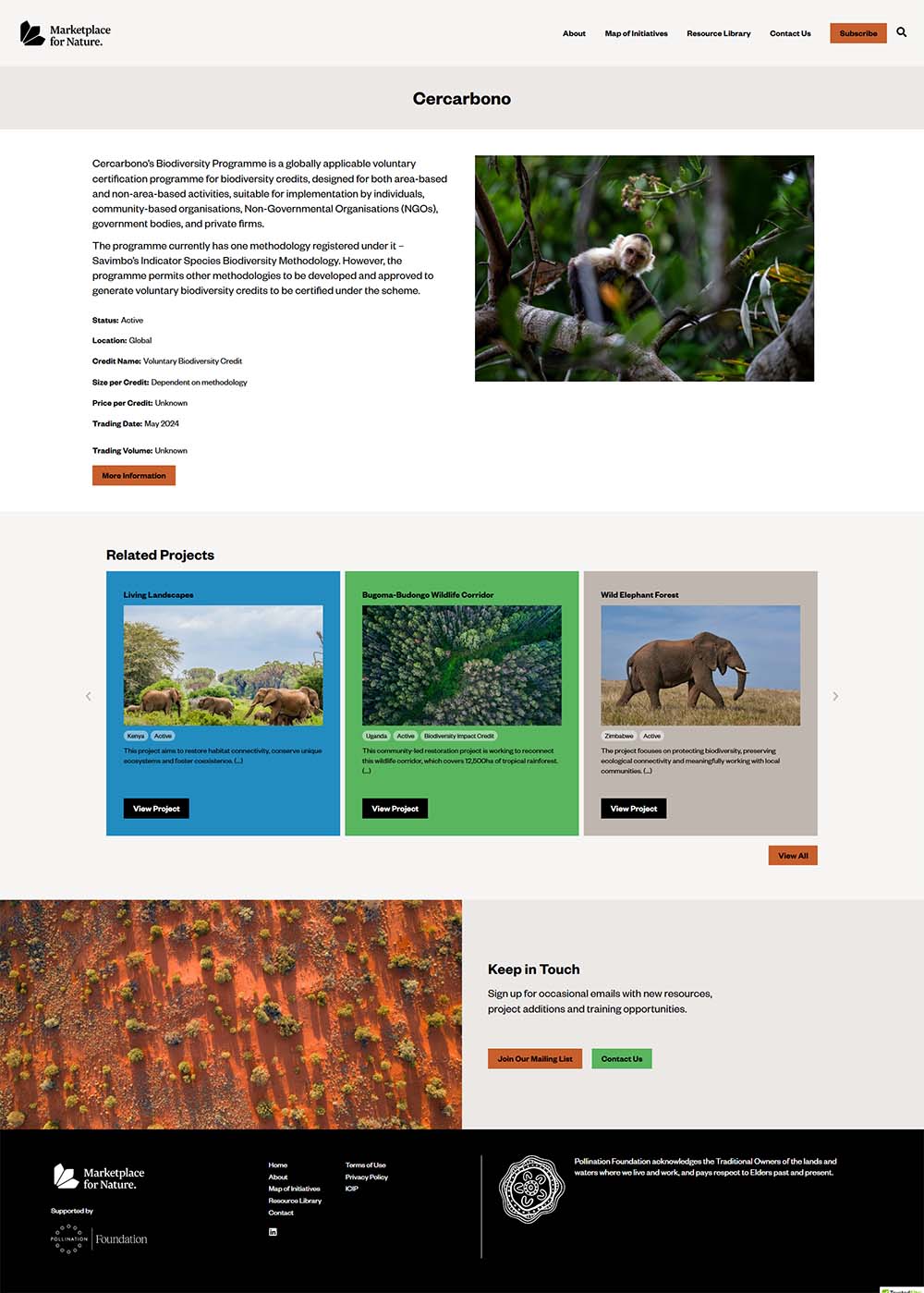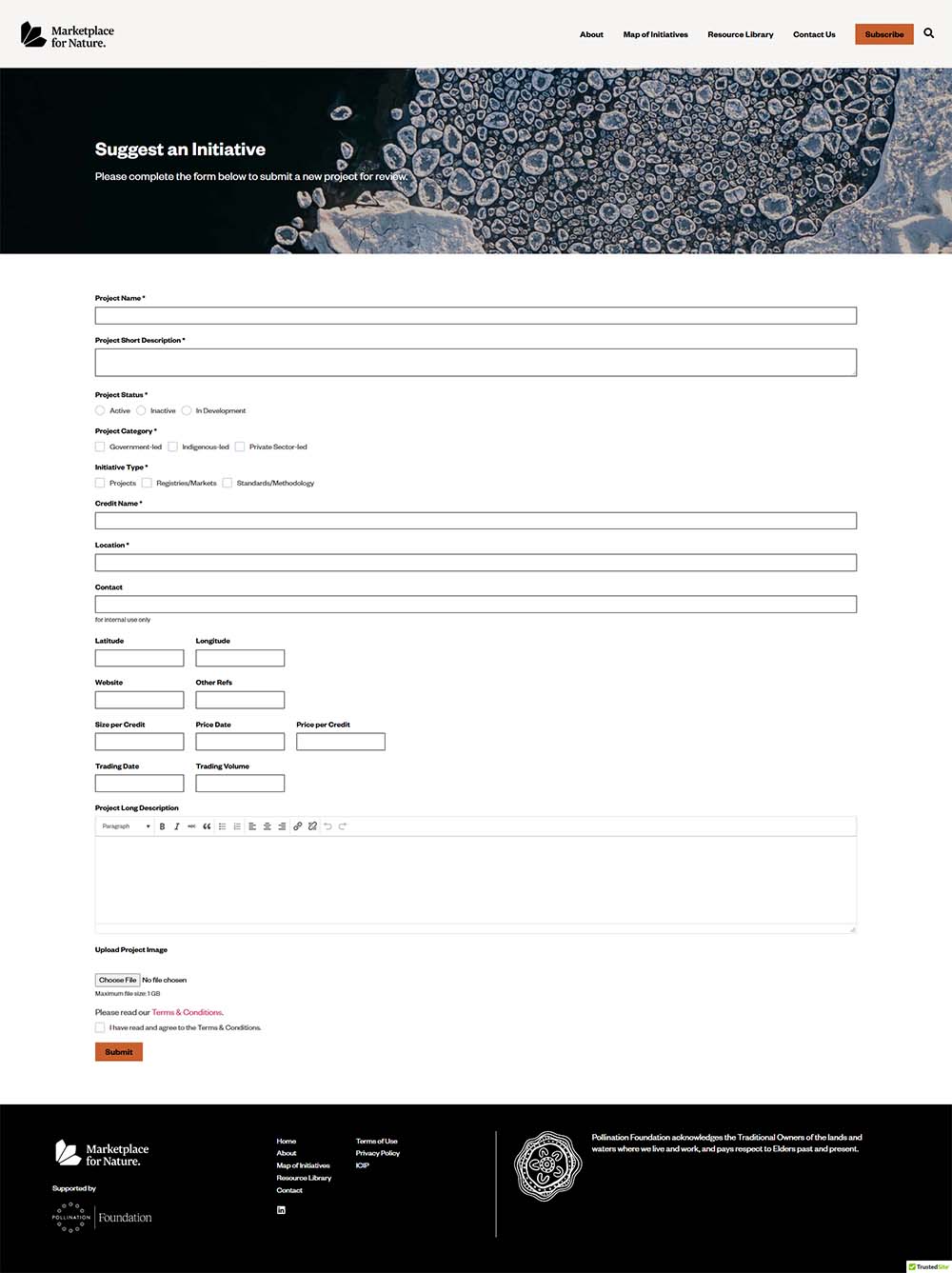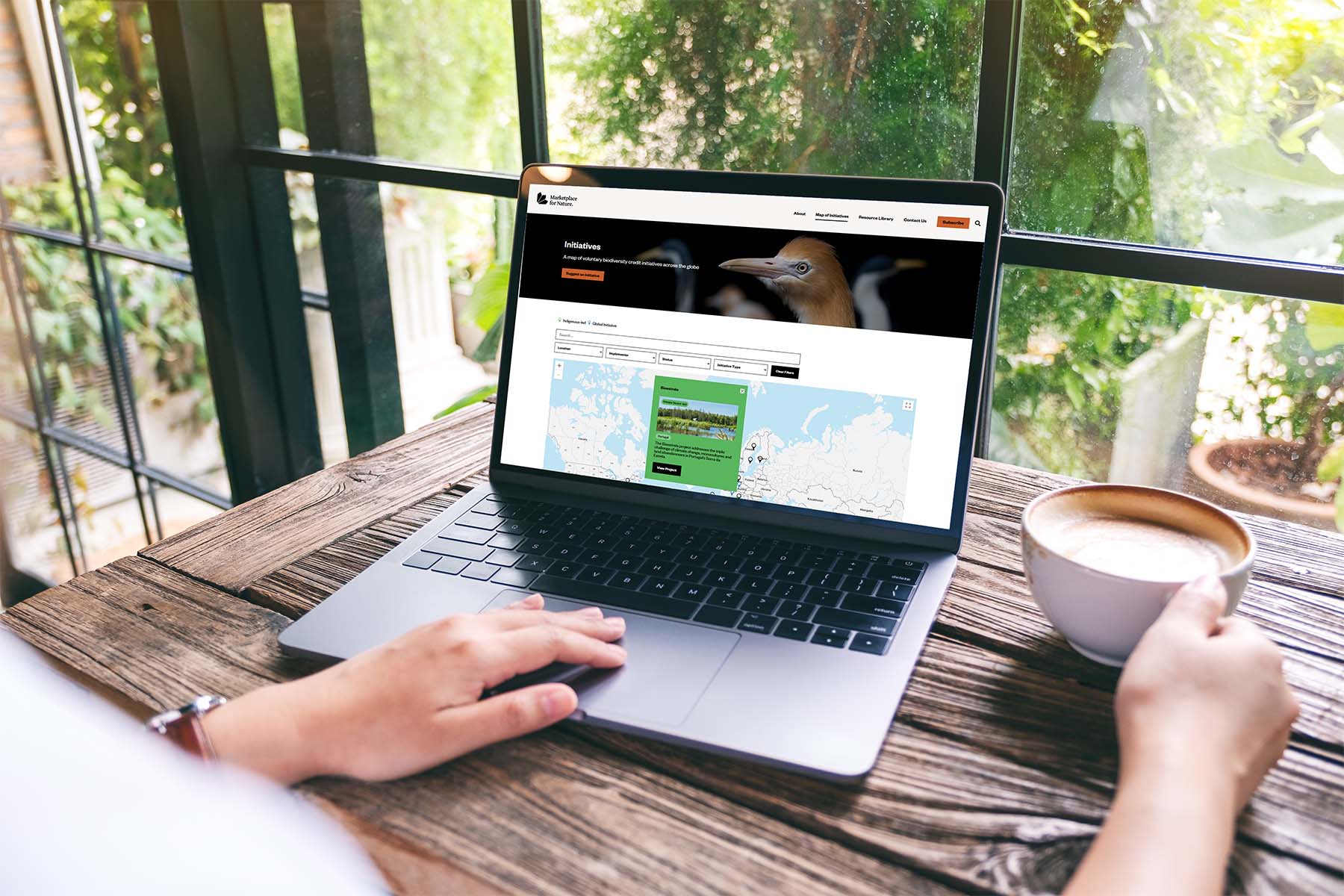
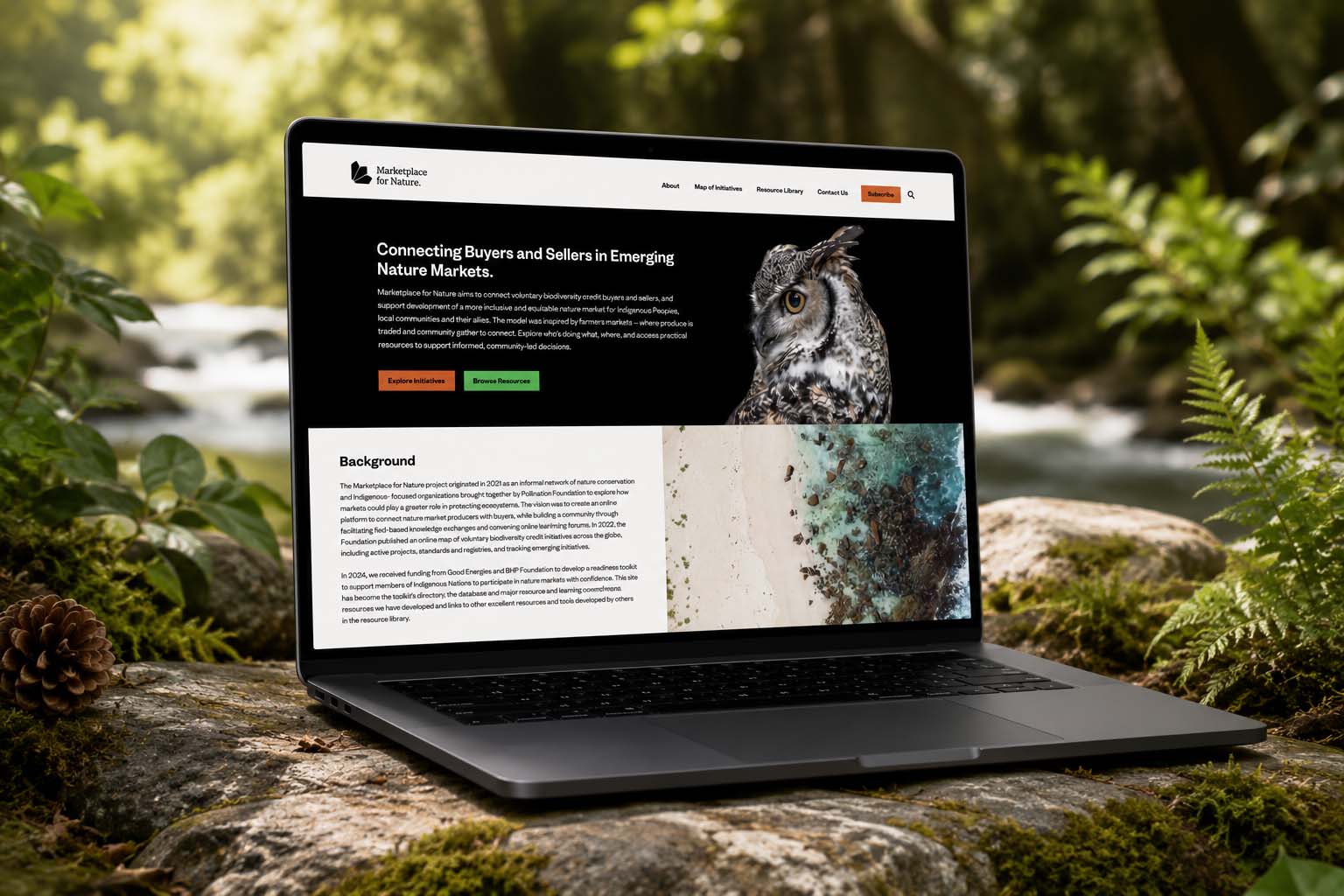
The brief was layered. At its core, the needed to replace the existing Marketplace for Nature site with a searchable, filterable platform that served four distinct audiences:

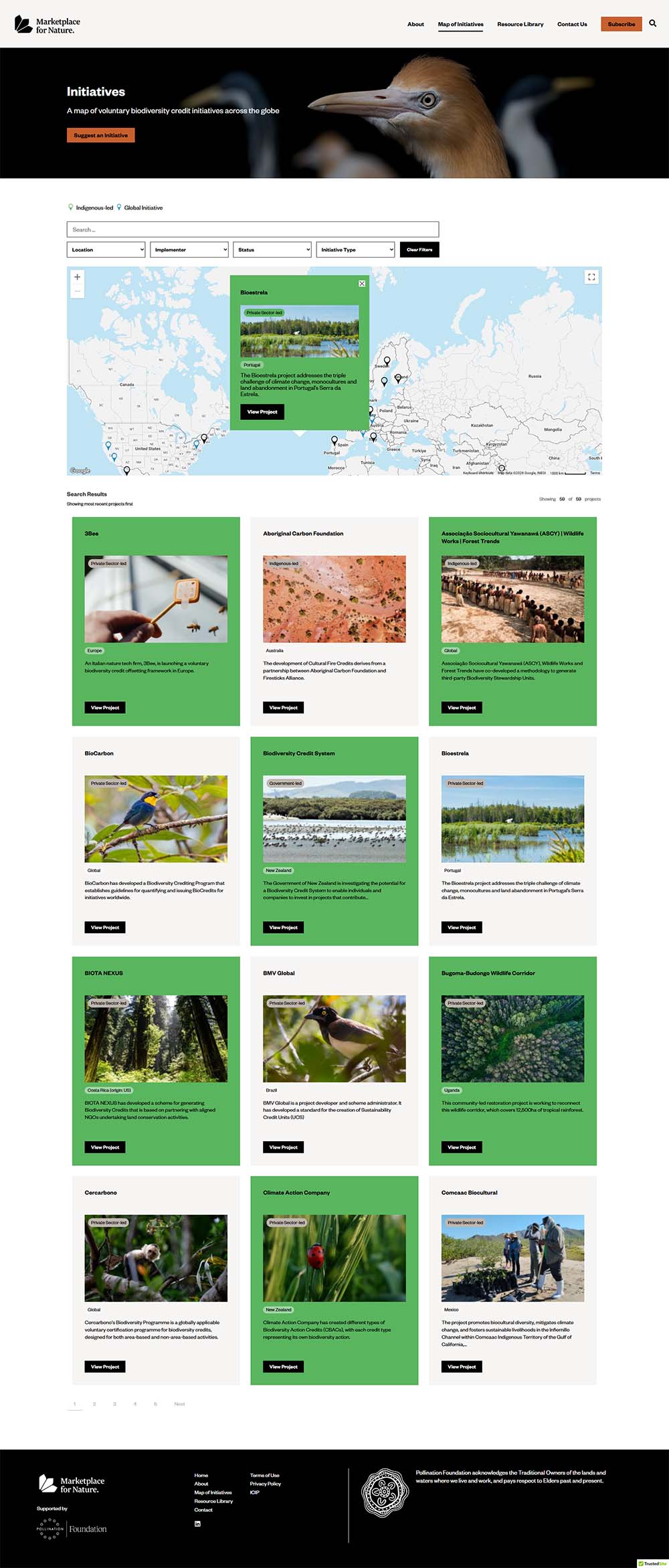
Filterable by location, project type, and status; capable of displaying parent organisations linked to their child projects; with clustering and spiderfy functionality for overlapping map points. At launch: approximately 60 parent schemes and 120 daughter projects, with data imported directly from existing Google Sheets.
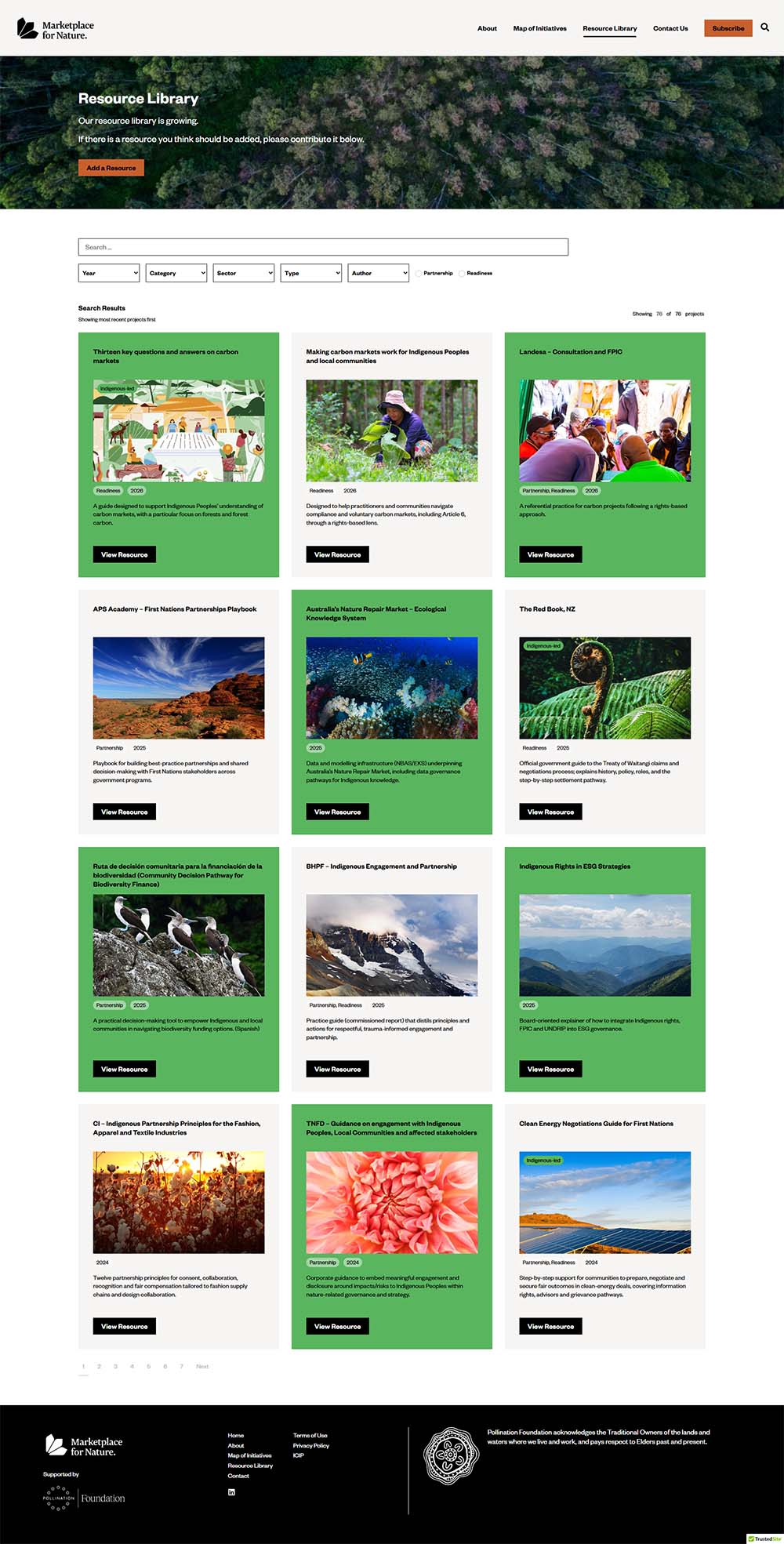
A searchable, filterable database of practical tools, guides, checklists, case studies, and documents. Around 87 resources at the time of briefing, anticipated to grow to 150 by launch. Data to be imported from Excel and Google Sheets, with ongoing editorial control by the Pollination team.
The ability for external users to propose new projects and resources for inclusion. Each new form is saved as a draft project or resource on the back end, allowing the team to manually review before publication, with spam protection built in.
Because content was being co-designed with communities and subject to ongoing consultation, the team needed to be able to edit, update, and add to the site without needing a developer every time.
The visual direction was shaped by the branding Pollination Foundation's in-house designer had already developed for the Marketplace for Nature. My job was to bring it to life in a way that felt credible, grounded, and deeply usable, from someone in rural Canada looking for a peer network to a Melbourne funder wanting a regional overview.
Clean typographic hierarchy. Generous whitespace. A palette anchored in black and white with natural imagery that quietly communicates what the platform is about.
The design restraint was intentional. When your content is maps of biodiversity projects across six continents and a library of governance tools for Indigenous Nations, the design's job is to get out of the way and let people find what they came for.
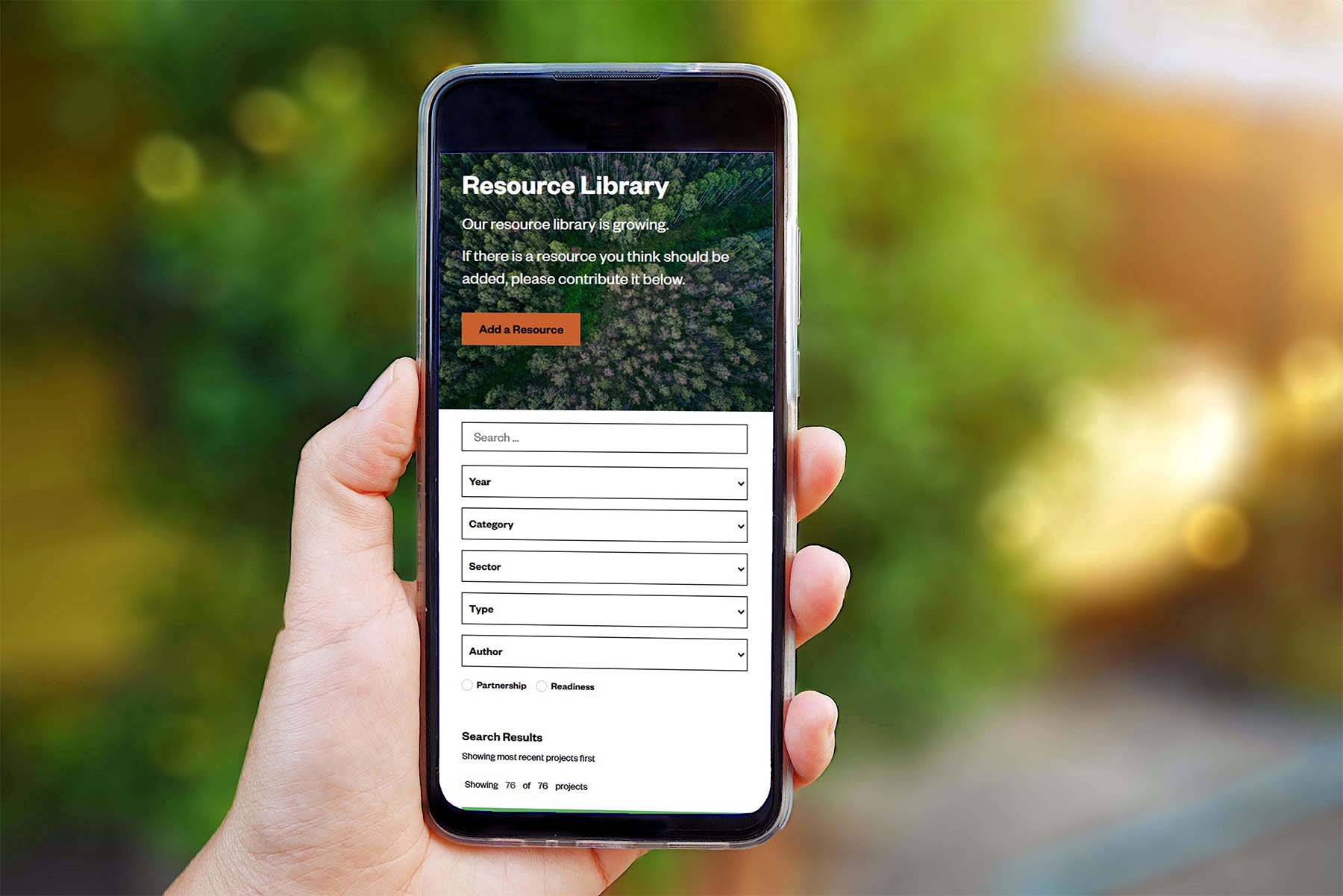
Built on WordPress with Elementor Pro, the site uses custom post types and dynamic filtering, powered by JetEngine by Crocoblock, to manage the structured data behind both the map and the resource library. Parent-child relationships between schemes and projects are handled through linked post types, allowing complex navigational relationships to display cleanly across the front end.
Data was imported directly from the client's existing Google Sheets and Excel files into structured content types, preserving the team's existing workflows while upgrading the platform's capability significantly.
The site was developed on a staging domain for live review and client feedback, then migrated to Marketplace for Nature's hosting on sign-off.
Marketplace for Nature launched as a credible, navigable, and genuinely useful platform, one that serves a community doing important work in a space that's moving fast.
It's a map. A library. A toolkit. A place to find peers, identify opportunities, and access the practical resources needed to participate in nature markets with confidence.