
I recently came across a business who proudly showed me their AI-built website.
It looked clean. It was live. There was a contact form. And that, more or less, was where the usefulness ended.
I see this more often than you might expect.
What AI Website Builders Are Actually Good At
Let me be honest about this, because I think the design industry has not always been.
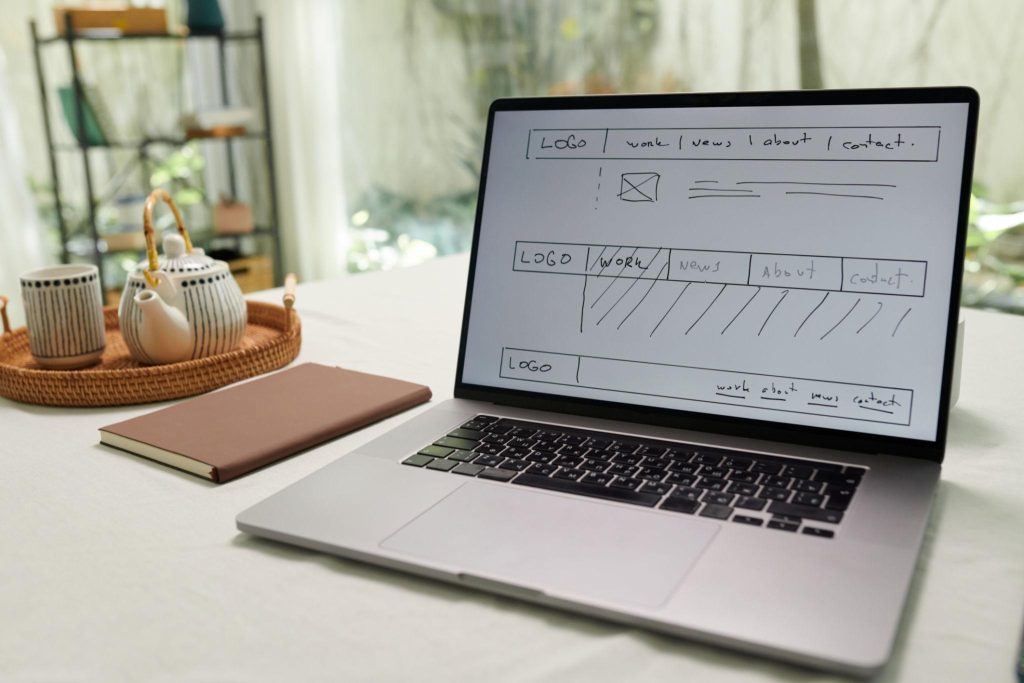
AI website builders have improved significantly. The best of them can produce something that looks professional in a fraction of the time and cost of a custom-built site. If you need to get something online quickly, to test an idea, to have a basic presence while you figure out your direction, an AI builder can do that job. It’s faster than waiting for a designer. It’s cheaper than hiring one. For certain businesses at certain stages, that tradeoff makes sense.
The output is also better than it used to be. The days of obviously templated sites with placeholder text are mostly gone. What AI builds now is visually competent. It will not embarrass you at a dinner party.
So I am not writing this to talk you out of using one. I am writing this because “AI built it” is the beginning of a conversation, not the end of one.
Why an AI-Built Website Might Be Costing You Clients
AI knows exactly what you told it. Which, for most people filling in a prompt box at 11pm, is not that much.
It does not know that your best clients almost always come through word of mouth and arrive already warm, which means your homepage does not need to work hard on trust-building but does need to make booking incredibly easy. It does not know that you have been burned by clients who did not understand your process, which means a clear explanation of how you work would save everyone time. It does not know that you are trying to move away from one kind of work and toward another, so the thing your site leads with actually needs to change.
These are the things a designer asks about before touching a layout. They are also the things that determine whether a website works as a business tool or just as evidence that you exist online.
There is a difference between a website that looks right and a website that does the right job. AI is currently very good at the first one. The second requires someone thinking about your specific situation.
Why Your Website’s Conversion Rate Matters More Than How It Looks
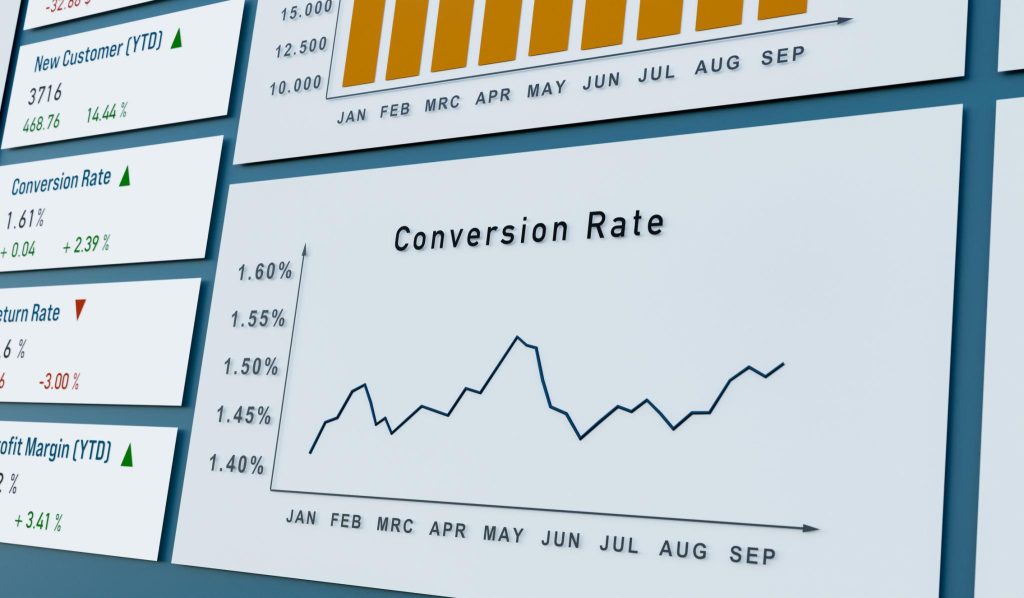
Conversion rate is the percentage of visitors who do what you want them to do. They book a call. They fill in a form. They make an enquiry. Think of it as the score your website gets for turning visitors into actual leads.
The industry average for a small service business is around 3% on contact form submissions. That means if 100 people land on your contact page, roughly three of them fill it in. A well-considered site, built around how your specific clients actually make decisions, can do significantly better than that.
Most AI-built sites sit below average. Not because they look bad. Because the structure follows a template rather than a strategy. The headline says what the business is rather than what the client gets. The call to action is buried. The most important information is three scrolls down.
Most AI-built sites sit below average. Not because they look bad. Because the structure follows a template rather than a strategy. The headline says what the business is rather than what the client gets. The call to action is buried. The most important information is three scrolls down.
These are solvable problems. But you have to know they are problems first.
The Hybrid Approach: When to Start Simple and When to Invest
You will see a lot of advice right now suggesting a hybrid approach. A hybrid starts with an AI builder to get something live quickly, then invests in a proper build once your business is more established. I think that is reasonable, with one caveat.
The transition point matters, and it is easy to miss.
A lot of businesses keep their AI-built site longer than they should because it is technically functional, and reworking it feels like an unnecessary expense when nothing seems broken. What is actually happening is a slow, invisible cost: leads who did not get in touch, clients who chose someone else because the site did not quite communicate what the business could do for them, opportunities that did not materialise because the contact process had too much friction.
The right time to move from “launched something” to “built something” is when your business has enough clarity about who it is for, what it does, and how it makes money that a website can actually reflect those things. That is not necessarily when you have a large budget. It is when you have enough information to make good decisions.
How to Know If Your AI-Built Website Is Actually Working

If you have built your own site with an AI tool, that is a reasonable starting point. The question worth asking is what job the site needs to do, and whether it is doing it.
Is it easy to contact you? Is it clear who you help and how? Does it load quickly on a phone? Does it show up when people search for what you do? Does it feel like you?
If the answer to most of those is yes, you might be in good shape. If there are obvious gaps, that is worth knowing sooner rather than later.
I offer a free 20-minute website review for small business owners who want a straight answer about what is working and what is not. No agenda. Just an honest look. You can book at www.hellobedesign.com.
Barbi Larkins is the founder of Be Design, a web design and digital strategy studio based in Lyttelton, New Zealand. She works with established small businesses across Aotearoa and Australia.
